
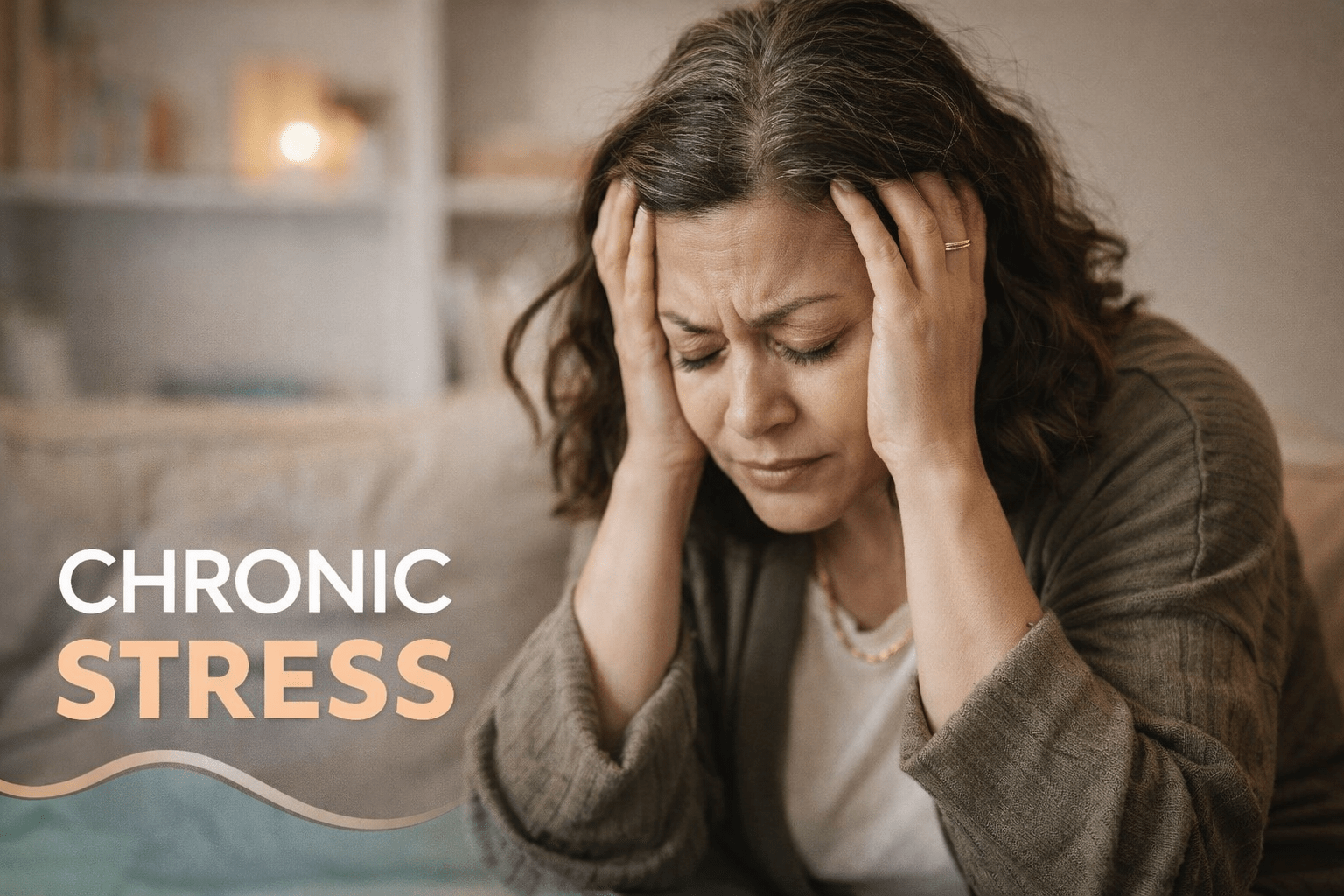
Chronic Stress in Women: What It Really Looks Like
There are seasons when a woman can be doing everything she is supposed to do and still feel like she is barely holding herself together.
I know that feeling.
I know what it is like to feel stuck. To feel like I could not do anything, but at the same time, I did not really have a choice. Life still had to keep going. People still needed things. Work still had to be done. Bills still had to be paid. Calls still had to be returned. There was no dramatic pause where everything just stopped because I was overwhelmed.
That is part of what makes chronic stress in women so hard to recognize. It does not always look like falling apart. A lot of the time, it looks like a woman continuing to function while something inside her is getting quieter, heavier, and more tired by the day.
It looks like responsibility.
It looks like competence.
It looks like being dependable when you are already running on empty.
— Dawn Feldpausch, LCSW
Why chronic stress in women feels different
A lot of women are not carrying one stressor. They are carrying layers.
Work. Family. Caregiving. Finances. Emotional labor. The mental load of keeping track of what everyone else needs. The pressure to stay kind, steady, productive, and okay, even when you are stretched far past what feels manageable.
That is why chronic stress in women often feels different from the way people casually talk about stress. It is not always just a bad week or a busy month. Sometimes it becomes the background of your life. It becomes the way your body feels when you wake up, the way your mind sounds when you lie down at night, and the way your emotions start thinning out because there is no room left for them.
The American Psychological Association and Cleveland Clinic have both pointed to the reality that women often carry stress in ways that are ongoing, layered, and emotionally costly.
What it actually looks like
Sometimes chronic stress in women looks like snapping over something small, then feeling bad about it later.
Sometimes it looks like being too tired to think clearly, but too wired to rest.
Sometimes it looks like sitting there knowing you need a break, knowing you need help, knowing something feels off, but still getting up and doing what has to be done because there is no one else to hand it to.
That part matters.
Because there were moments when I felt so mentally stuck that even simple things felt hard. Not because I was lazy. Not because I did not care. But because I had hit that point where my mind and body were both telling me they had had enough. And still, life was not offering me a graceful little intermission. I had to keep moving anyway.
That is a big part of chronic stress in women. The trapped feeling. The sense that you are overwhelmed, but there is no clean way to stop.
Sometimes it sounds like this:
- “I’m tired all the time, but I can’t slow down.”
- “I don’t even know what I need anymore.”
- “I’m still doing everything, but I don’t feel like myself.”
- “I feel stuck, but I don’t have the option of falling apart.”
A lot of women do not call that chronic stress at first. They call it life. They call it adulthood. They call it getting through.
But just because something has become normal does not mean it is not hurting you.
If you are wondering whether what you are feeling is burnout and not just a rough week, start with our free burnout quiz for women.
The invisible part no one sees
A lot of stress is invisible.
It is not just the things you do. It is everything you carry in your head while you are doing them.
Remembering. Planning. Tracking. Worrying. Anticipating. Holding things together emotionally for other people. Managing your own reactions while still trying to be what everyone needs you to be.
That invisible load is a huge part of chronic stress in women.
— Dawn Feldpausch, LCSW
And sometimes that is what creates the stuck feeling. It is not that you want to do nothing. It is that there is so much happening internally that even one more thing feels impossible.
Why “just take care of yourself” can feel hollow
Most women already know they need rest.
That is not usually the problem.
The problem is that rest can feel impossible when your life keeps demanding your presence, your labor, your care, your attention, and your emotional energy.
So when a woman is living with chronic stress in women, generic advice can miss the mark. A bath does not fix emotional overload. A planner does not solve exhaustion. Telling a woman to “take care of yourself” does not help much if nobody is helping carry what is draining her in the first place.
Sometimes what helps first is not advice.
Sometimes it is hearing the truth:
- Of course you feel this way.
- Of course you are tired.
- Of course you feel stuck.
- Look at how much you have been carrying.
What actually helps
Usually, healing starts with honesty.
Not minimizing it.
Not pretending it is fine.
Not waiting until you are completely depleted.
Sometimes the first real step is just admitting:
- This is too much.
- I feel stuck.
- I have been carrying more than I can hold.
- No wonder I do not feel like myself.
From there, support can look like better boundaries, more honest conversations, less isolation, more practical help, and spaces where women do not have to perform being okay.
That part matters because chronic stress in women gets heavier in isolation.
The CDC’s work on social connectedness and NIMH’s anxiety data both reinforce what many women already know from lived experience: stress gets worse when you feel alone in it.
If you want the deeper why behind connection, read our Science of Sisterhood article.
This is not you failing
A lot of women blame themselves for what stress is doing to them.
They think they are not patient enough, strong enough, organized enough, grateful enough, resilient enough.
But often the truth is much simpler.
They are overloaded.
Chronic stress in women can change the way a woman thinks, sleeps, reacts, feels, and moves through her day. It can make her feel unlike herself. It can make joy feel farther away. It can make even simple things feel heavier than they used to.
That is not weakness.
That is wear.
If this feels familiar, you are not the only one carrying it.
Shine On Movement exists to create real support, connection, and practical tools for women who are tired of holding everything alone. Visit Shine On Movement to explore more.
Final thoughts
If this feels personal, that is because it is.
There were moments when I felt stuck and still had to keep going. Moments when I felt like I could not do anything, but life did not stop asking things from me. And I know I am not the only woman who has felt that way.
That is why this matters.
Chronic stress in women is real. It is personal. And it deserves more than being brushed off as just part of being busy.
— Dawn Feldpausch, LCSW
If this feels familiar, you are not weak. You are not failing. You may simply be carrying too much for too long.
And you do not have to wait until you are completely worn down to admit that something needs to change.
Frequently asked questions about chronic stress in women
These are some of the most common questions women ask when stress stops feeling temporary and starts feeling like a way of life.
What is chronic stress in women?
Chronic stress in women is ongoing emotional, mental, and physical strain that does not fully let up. It often builds through caregiving pressure, work stress, financial stress, emotional labor, and the constant mental load of keeping life moving.
What are the signs of chronic stress in women?
Signs can include exhaustion, trouble sleeping, irritability, overthinking, headaches, emotional numbness, resentment, mental fog, feeling stuck, and the sense that you are always “on” even when you are worn out.
How is chronic stress in women different from burnout?
Burnout is often one result of chronic stress in women, especially when stress has gone on for too long without enough support or recovery. Chronic stress is the ongoing pressure. Burnout is often what happens when that pressure starts draining your energy, hope, patience, and ability to keep functioning the same way.
Can chronic stress in women affect the body?
Yes. Chronic stress in women can affect sleep, energy, mood, focus, muscle tension, headaches, digestion, and overall emotional well-being. When the nervous system stays under pressure for too long, the body usually feels it too.
What helps when chronic stress in women feels overwhelming?
What helps most is usually a combination of honesty, support, better boundaries, less isolation, more realistic expectations, and practical help. Sometimes the first step is simply admitting that what you are carrying is too much and that you should not have to hold all of it alone.
Suggested excerpt: Chronic stress in women can look like emotional overload, caregiving pressure, mental fatigue, and the feeling of being stuck while life still expects you to keep going.
Disclaimer
Shine On Movement operates under Healing Minds Initiative, Inc., a registered 501(c)(3) nonprofit organization.
The information provided in this article is for educational and informational purposes only and is not intended as medical or mental health treatment. Participation in Shine On Movement programs does not establish a therapeutic relationship.
If you are experiencing a mental health crisis or require clinical care, please contact a licensed healthcare provider. In the United States, you may call or text 988 for immediate crisis support.
Always consult a qualified medical or mental health professional regarding any questions about your health or treatment.